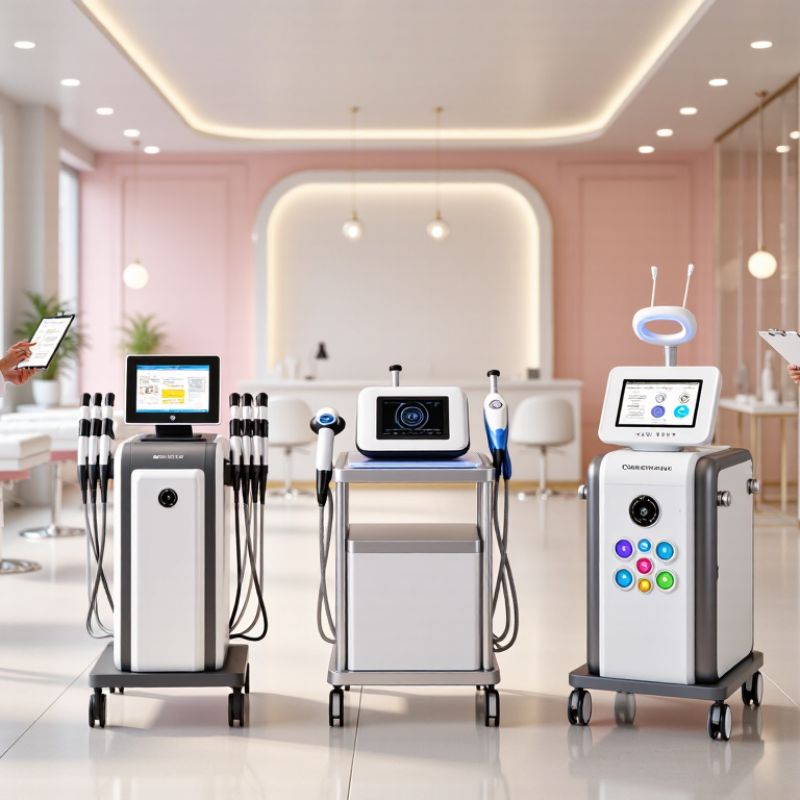
How to Choose Facial Machines for a New Beauty Salon?

Time:2026-10-13 Author:Amelia
0%

Opening a new beauty salon requires more than attractive equipment and persuasive sales claims. It requires a clear answer to “how to choose facial machines for a new beauty salon” based on client needs, staff capability, safety, and measurable returns.

The Global Wellness Institute reported that the global wellness economy reached $6.3 trillion in 2023. Grand View Research also identifies skincare as a growing global market, driven by professional treatments and personalized care. These figures suggest strong demand, but they do not guarantee profit for every machine. A device may look impressive in a showroom, yet remain unused beside a treatment bed. That is an expensive mistake.

Dr. Zein Obagi, a respected dermatologist and skincare expert, often states, “Healthy skin is beautiful skin.” This principle should guide equipment decisions. Select machines that support healthy, evidence-informed treatments, rather than chasing dramatic marketing language. Check adjustable energy levels, treatment indications, training requirements, maintenance schedules, consumable costs, and supplier support. Ask whether your therapists can use the device confidently on a busy Saturday.

Safety documentation matters. So do service records and realistic return-on-investment calculations. Review manufacturer evidence, applicable local requirements, and independent professional feedback before purchasing. Do not assume the newest technology is the best choice. Sometimes, a simpler machine delivers better consistency and stronger client trust. That is not glamorous. It may be more practical.

This guide examines facial technologies, budget priorities, staff training, supplier credibility, and client suitability. It also questions common purchasing assumptions, because choosing equipment well is partly technical judgment and partly honest reflection.

How to Choose Facial Machines for a New Beauty Salon?

Define the Facial Treatments Your New Salon Will Offer

A new salon should define its facial treatments before purchasing any machine. The treatment menu determines the technology, training, room layout, and operating costs. According to the International Society of Aesthetic Plastic Surgery’s 2023 Global Survey, non-surgical aesthetic procedures remained highly popular worldwide. This signals demand, but demand alone cannot justify every device.

Start with three clear services, such as deep cleansing, gentle exfoliation, and hydration support. Add LED therapy or controlled microcurrent only when staff understand contraindications and operating limits. Each treatment should have a written protocol, including skin assessment, treatment time, sanitation, and aftercare. A machine may look impressive in a showroom. It may still be unsuitable for sensitive clients or poorly trained therapists. That is an uncomfortable lesson, but an important one.

Tips: Match every device to one defined treatment. Ask suppliers for training records, safety documentation, and maintenance details. Check local regulations before offering electrical or light-based services. The International SPA Association reported that U.S. spa locations generated $21.3 billion in revenue during 2023, with 175 million visits. This growth supports careful investment, not rushed buying. Track consultation time, repeat bookings, consumable costs, and client feedback for three months. Your first menu may need revision. That is normal. A smaller menu with consistent results often builds more trust than a room filled with expensive equipment.

Match Machine Types to Skin Concerns and Treatment Goals

Choosing facial machines should begin with skin concerns, not impressive screens or crowded treatment menus. A salon serving clients with dehydration may need a gentle infusion or hydration-focused device. For congestion, controlled exfoliation and suction can support cleansing when used carefully. Uneven tone may call for light-based equipment, but assessment and skin history must guide settings. The goal is not maximum intensity. It is a predictable, comfortable result.

Match each device to a defined outcome: cleansing, hydration, calming, texture refinement, or the appearance of fine lines. During consultation, check sensitivity, current products, recent procedures, and relevant medical conditions. A trained professional should explain expected results and possible reactions before treatment. Patch testing may be appropriate for energy-based procedures. Keep records of settings and client responses. Small details matter. They improve repeatability.

Practical selection also depends on operator training, cleaning routines, maintenance, and room workflow. A machine that sits unused is an expensive decoration. I have seen salons choose multifunction equipment before identifying their client profile; that decision often creates inconsistent treatments. Question sales language and request technical documentation, training requirements, and realistic treatment intervals. Some choices still fail after careful planning. Review outcomes monthly, listen to client feedback, and adjust the menu instead of forcing every concern into one device.

Evaluate Safety Features, Certifications, and Treatment Controls

How to Choose Facial Machines for a New Beauty Salon?

Evaluate Safety Features, Certifications, and Treatment Controls

A new salon should assess safety before comparing treatment results. Check the machine’s emergency stop, insulated handpieces, stable power supply, and overheating protection. Clear warning labels matter. So does a readable user manual. During a practical inspection, examine cables for weak bends, exposed wires, or loose connectors. Small defects can become serious during busy appointments.

Certification requires careful verification. Ask for documents from an approved testing organization, then confirm the certificate covers the exact model. A generic document may not prove much. Check electrical safety, electromagnetic compatibility, and maintenance requirements for your region. Keep copies in the salon’s equipment file. Staff should also receive documented training, not just a quick demonstration. Training records support consistent and accountable practice.

Treatment controls should match real client needs. Look for adjustable intensity, pulse duration, temperature, suction, and treatment time. A lockout feature can prevent accidental high settings. Skin-contact sensors and automatic cooling add another layer of protection. The interface should show active settings clearly, even under bright salon lights. Test the machine on low settings before client use. I have found that complicated controls invite mistakes, especially when staff feel rushed. That weakness deserves honest attention. A beautiful screen does not guarantee safe operation. Ask whether staff can explain contraindications, cleaning steps, and emergency procedures without checking the manual.

Compare Budget, Maintenance Needs, and Staff Training Requirements

How to Choose Facial Machines for a New Beauty Salon?

Compare Budget, Maintenance Needs, and Staff Training Requirements

A new salon should compare total ownership cost, not only the purchase price. A $2,000 machine may need special cartridges, frequent calibration, or costly service visits. Request a written warranty, replacement-part prices, and expected downtime. Keep at least 10% of the equipment budget for maintenance and staff training. This is a practical estimate, not a universal rule.

The Global Wellness Institute valued the wellness economy at $5.6 trillion in 2022. Demand is growing, but clients also expect safe, consistent treatments. Choose machines with clear operating instructions, adjustable intensity, and accessible cleaning areas. Disposable components can improve hygiene, although they may increase monthly costs. Record every treatment, fault, and cleaning task. Small records reveal expensive patterns.

Training deserves equal attention. The ISAPS 2023 Global Survey reported 19,078,006 nonsurgical procedures worldwide. More treatments mean greater pressure for reliable technique and informed client communication. Staff should practice on training models before serving clients. They need instruction on contraindications, skin assessment, emergency responses, and aftercare. A short demonstration is not enough. Schedule supervised practice and refreshers every few months. I would not assume an advanced machine creates better results. Sometimes, a simpler device produces safer, more repeatable work. The ideal purchase balances cash flow, maintenance access, and the team’s actual skill level.

How to Choose Facial Machines for a New Beauty Salon?

Compare Budget, Maintenance Needs, and Staff Training Requirements

Machine Type Typical Purchase Budget
(USD)
Typical Treatment Uses Routine Maintenance Consumable Costs Recommended Initial Training Operational and Safety Considerations Suitability for a New Salon
Ultrasonic Skin Scrubber $150–$1,000 Surface cleansing, exfoliation, and product-assisted facial treatments. Clean and disinfect the spatula after every client; inspect the cable and handpiece regularly. Low; mainly cleanser, disinfectant, gloves, and disposable towels. 2–4 hours of hands-on instruction, including contraindications and sanitation. Use only on suitable skin conditions and avoid broken or irritated skin. Follow the device’s electrical-safety instructions. Excellent
Low entry cost and simple workflow.
LED Phototherapy Panel or Mask $300–$2,500 Non-invasive cosmetic support for acne-prone skin, redness, and the appearance of fine lines. Disinfect contact surfaces after every treatment; check LEDs, timers, eye protection, and cables periodically. Low; protective eyewear and disinfectant are usually sufficient. 2–4 hours, covering light settings, treatment timing, eye protection, and contraindications. Clients using photosensitizing medication or with light-sensitive conditions may require medical clearance. Use appropriate eye protection. Excellent
Easy to add to existing facial services.
High-Frequency Facial Device $150–$1,200 Post-cleansing facial treatments and temporary support for oily or blemish-prone skin. Disinfect electrodes after every use; inspect glass electrodes for cracks and replace damaged parts immediately. Low; disinfectant and replacement electrodes when required. 3–5 hours, including electrode handling, timing, skin assessment, and electrical precautions. Follow contraindications such as certain implanted electronic devices, pregnancy-related restrictions, or damaged skin according to local guidance. Very Good
Affordable, but proper handling is essential.
Microcurrent Facial Device $500–$3,000 Temporary facial toning and appearance-focused lifting treatments using low-level electrical current. Clean probes after every client; inspect leads and connectors; test output according to the service manual. Low to moderate; conductive gel is normally required for each treatment. 4–8 hours, including polarity, current settings, facial mapping, and contraindications. Do not use over unsuitable areas or on clients with relevant electronic implants or other contraindications identified by the manufacturer and local rules. Very Good
Good add-on service with manageable training.
Hydrodermabrasion System $2,000–$8,000 Water-based cleansing, exfoliation, hydration, and serum infusion treatments. Flush and disinfect fluid lines after every client; empty waste containers; replace filters and tubing as scheduled. Moderate to high; solutions, tips, filters, and disposable tubing may be needed. 6–12 hours, including solution handling, pressure control, sanitation, and treatment protocols. Requires careful cross-contamination control and correct storage of solutions. Confirm plumbing, drainage, and electrical requirements before purchase. Good
Attractive service potential but higher operating complexity.
Diamond Microdermabrasion $1,000–$4,000 Mechanical exfoliation for improving the appearance of uneven texture and dull skin. Disinfect handpieces after every treatment; clean the vacuum pathway and replace filters according to the service schedule. Moderate; disposable tips or protective supplies may be required. 6–10 hours, including pressure control, skin assessment, contraindications, and sanitation. Avoid excessive pressure and unsuitable skin conditions. Correct vacuum settings help reduce irritation and bruising risk. Good
Useful for experienced facial staff.
Professional Radiofrequency Facial Device $3,000–$15,000 Controlled skin-heating treatments intended to improve the appearance of firmness and fine lines. Clean the treatment head after every client; inspect cables; verify temperature controls and arrange periodic servicing. Low to moderate; conductive gel and disposable supplies are commonly used. 8–16 hours plus supervised practice, covering temperature monitoring, energy settings, skin assessment, and contraindications. Overheating can cause burns. Staff must follow treatment limits, use temperature monitoring, and comply with local training requirements. Moderate
Higher revenue potential but greater safety responsibility.
Professional IPL Hair-Reduction or Photo-Facial System $8,000–$40,000+ Light-based cosmetic hair reduction and selected appearance-focused skin treatments. Clean the treatment window after every client; check cooling and handpiece condition; arrange calibration and scheduled servicing. Low per treatment, but replacement lamps, filters, or handpieces can be expensive. 16–40+ hours, supervised practice, skin-type assessment, eye protection, patch testing, and emergency procedures. Licensing, certification, insurance, medical oversight, and permitted-use rules vary by location. Strictly assess photosensitivity, medications, skin type, and contraindications. Advanced
Consider only after confirming local legal and insurance requirements.
Oxygen Infusion Facial Device $800–$5,000 Cosmetic serum application and cooling or refreshing facial treatments. Disinfect the nozzle after every use; clean air pathways and replace filters as recommended. Moderate; serums, cartridges, tubing, and disposable nozzles may be required. 3–6 hours, including pressure control, product compatibility, sanitation, and client screening. Use only compatible products and avoid applying unsuitable substances under pressure. Maintain clean air and fluid pathways. Good
Simple service addition with recurring product costs.
Planning notes: Budget ranges are indicative estimates for professional equipment in the United States and exclude taxes, shipping, room renovation, insurance, licensing, and installation. Actual costs vary by power requirements, included accessories, warranty coverage, local regulations, and service contracts. Maintenance intervals should always follow the equipment manual. Before purchasing energy-based equipment, verify local licensing rules, staff qualifications, insurance requirements, and manufacturer-approved training.

Choose a Reliable Supplier and Plan Your Salon’s Equipment Setup

How to Choose Facial Machines for a New Beauty Salon?

Choose a Reliable Supplier and Plan Your Salon’s Equipment Setup

A new salon should choose a supplier before choosing facial machines. Ask for product certificates, service records, training plans, and written warranty terms. A low purchase price can hide expensive repairs. Confirm spare-part availability, response times, installation support, and operator training. These details matter when a machine stops working during a busy Saturday.

Demand is growing, but equipment still needs careful justification. The Global Wellness Institute reported that the global wellness economy reached $5.6 trillion in 2022. Its 2023 report projects growth to $8.5 trillion by 2027. The ISAPS Global Survey 2023 recorded over 19 million nonsurgical aesthetic procedures worldwide. These figures show market interest, not guaranteed salon revenue. Your local clients may prefer gentle cleansing, hydration, or soothing treatments instead.

Plan the room around workflow, not advertisements. Measure doorway width, electrical capacity, water access, ventilation, and treatment-bed space. Leave clear movement around the trolley. Keep clean towels separate from used materials. Ask suppliers for realistic treatment times, consumable costs, cleaning steps, and safety guidance. Request a live demonstration with different skin types, if possible. My practical warning is simple: buying too many devices creates clutter and weakens staff training. Start with one versatile, supportable machine, then review bookings after three months. The first layout may be wrong. Adjust it.

How to Choose Facial Machines for a New Beauty Salon?

Choose machines by treatment purpose, electrical requirements, safety features, warranty coverage, training support, and spare-parts availability. The chart shows representative rated power values commonly found in professional facial equipment specifications, helping you plan circuits and total salon capacity before ordering.

Actual power ratings vary by model and supplier. Always confirm the technical datasheet, voltage, plug type, warranty terms, installation requirements, and after-sales service before purchasing.

FAQS

Why should a new salon define treatments before buying machines?

The treatment menu guides technology, staff training, room layout, and ongoing costs. A machine should serve a clear purpose.

Which facial treatments are suitable for a small starting menu?

Begin with deep cleansing, gentle exfoliation, and hydration support. A smaller menu may produce more consistent results.

What safety features should a facial machine include?

Look for an emergency stop, insulated handpieces, overheating protection, stable power, and clear warning labels. Test every control carefully.

How can a salon verify equipment certifications?

Request certification for the exact model from an approved testing organization. Keep copies with maintenance and safety records.

What training should salon staff receive?

Staff need documented training on settings, contraindications, cleaning, aftercare, and emergency procedures. A quick demonstration is not enough.

Which treatment controls are especially useful?

Adjustable intensity, pulse duration, temperature, suction, and treatment time support different client needs. Lockout settings can prevent accidental increases.

How should a salon evaluate a supplier?

Ask about warranties, spare parts, repairs, installation, training, and response times. A cheap machine may create costly delays.

How should the treatment room be planned?

Measure doorways, power capacity, water access, ventilation, and bed space. Leave room for a trolley and separate clean towels from used materials.

Should a new salon buy several machines immediately?

Usually not. Start with one versatile, supportable machine, then review bookings, costs, and feedback after three months.

What mistakes might a new salon need to reconsider?

An impressive screen can distract from complicated controls. The first menu or layout may be wrong, and revision is normal.

Conclusion

Choosing the right equipment is an important step when planning a new beauty salon. This guide explains how to choose facial machines for a new beauty salon by first defining the facial treatments you intend to offer, such as cleansing, hydration, rejuvenation, or targeted skin care. Each machine should match your clients’ skin concerns and treatment goals, while offering practical controls for adjusting intensity, duration, and operating modes.

Before making a purchase, carefully evaluate safety features, required certifications, sanitation considerations, and ease of use. It is also important to compare the total cost, including maintenance, replacement parts, consumables, and staff training. Finally, select a reliable supplier that provides clear product information, technical support, and useful training resources. Planning the equipment layout in advance can improve workflow, protect client comfort, and help your team deliver consistent, professional treatments.

Amelia

Amelia

Amelia is a seasoned marketing professional with a wealth of expertise in our company’s core offerings. With an unwavering passion for driving growth and innovation, she plays a pivotal role in shaping our marketing strategies and enhancing brand visibility. A key aspect of her responsibilities......